You buy two candles from the same maker, same jar, same scent family. One burns cleanly to the bottom. The other tunnels, flickers, and gives up halfway down. Nothing has gone wrong with the recipe. Burn time is the product of a handful of variables, and small changes in any of them add up fast. Wax, wick, fragrance, the temperature of the room and the air moving through it all pull in different directions. Understand how they interact and you can predict, and often improve, what you get from a candle.
The burn time on the label is an estimate, not a promise
Most quoted burn times come from the maker's own testing: burn the candle in a controlled room, measure how much wax is used per hour, divide the total wax weight by that figure. It's a reasonable calculation and it's usually honest. It simply assumes still air, an average room temperature and a wick that behaves itself. Move the candle to a draughty windowsill or a warm kitchen and the maths stops matching reality. Treat the number as a fair guide to relative performance — this candle lasts longer than that one — rather than a stopwatch.
Wax type sets the baseline
Wax is the fuel, and different waxes release that fuel at different rates. Broadly speaking, the softer the wax and the lower its melt point, the faster a candle tends to burn, because less heat is needed to turn it into liquid for the wick to draw up. Hardeners and added oils shift the picture further.
Beeswax is dense with a high melt point; it burns slowly and for a long time, which is one reason it suits pillars. Paraffin is softer and burns hot and fairly quickly, though it throws scent powerfully. Soy wax sits somewhere in the middle, burning cooler and often slower, but its softness means a poor wick choice leads straight to tunnelling — and a tunnelled candle wastes more wax than it burns, so you get far fewer usable hours. Coconut and rapeseed blends vary widely depending on how they're formulated. If you make candles, keep track of the wax batch. If you buy them, the wax blend explains a lot of the difference between two candles of the same weight.
The wick decides how much fuel reaches the flame
The wick is the control valve. Too small, and the flame can't melt wax fast enough to keep pace with the melt pool. The candle tunnels, drowning itself and leaving a ring of unused wax behind. Too large, and the flame pulls more fuel than it needs: the candle burns hot and fast, mushrooms, soots the glass, and can use up the wax well before its rated time.
Trimming is not optional
A wick trimmed to roughly 3–5mm burns steadily. Leave it long and the flame grows, curling over and drawing extra fuel. Trim before every burn once the candle has cooled, and again if the flame starts to flicker or smoke.
Jar shape matters more than size
Two candles of equal weight can have very different diameters. A wide jar needs a bigger wick, or several wicks, to melt the surface evenly. A tall, narrow jar needs a longer first burn to establish a full melt pool before tunnelling sets in. This is why a wide 200g candle and a slim 200g candle rarely last the same number of hours.
Fragrance load and oil type
Scent is not free. Fragrance oils change how the wax behaves: some thin it and speed up the burn, others thicken it and slow the flow of fuel up the wick. Heavier, resinous oils — vanilla, amber, oud types — are well known for clogging wicks, which shortens the flame and leads to a weak, tunnelling burn. Loading a candle past the wax manufacturer's recommended maximum usually makes things worse rather than better: more scent, a struggling wick, and a shorter life.
Dye and other additives count too. Pigment adds particles for the wick to cope with, and a heavy dye load can affect the burn in much the same way as a heavy fragrance load.
Temperature and air movement
Room temperature changes how much wax is already liquid when the flame arrives. In a warm room the surface wax is soft, the melt pool forms quickly and the wick draws fuel easily — which sounds ideal, but a candle burning in a hot room often runs faster and can soften out of shape. In a cold room, wax resists melting, the melt pool stays narrow, and you end up with tunnelling and wasted wax.
Draughts are the bigger culprit. Air moving across a candle pushes the flame to one side, so the melt pool becomes lopsided and the wick burns unevenly. The flame also grows as it draws more oxygen, consuming wax faster and producing soot. A candle on a windowsill, beneath a ceiling fan or beside a door will never perform like the same candle in a sheltered spot.
How you burn it changes everything
- Give the first burn time. Burn long enough for the melt pool to reach the edge of the jar — often two to three hours for a container candle, longer for a large one. That first session sets the memory of the candle.
- Keep sessions sensible. Very long burns overheat the container and can cause the wick to lean. Very short ones carve a narrow well that deepens with each lighting.
- Check the room. Move the candle away from draughts, radiators and direct sun before you light it.
- Trim and tidy. Remove mushroomed wick tips and any debris before relighting.
- Stop when the wax runs low. Burning the last centimetre is unsafe and risks cracking the jar.
Getting the most from every candle
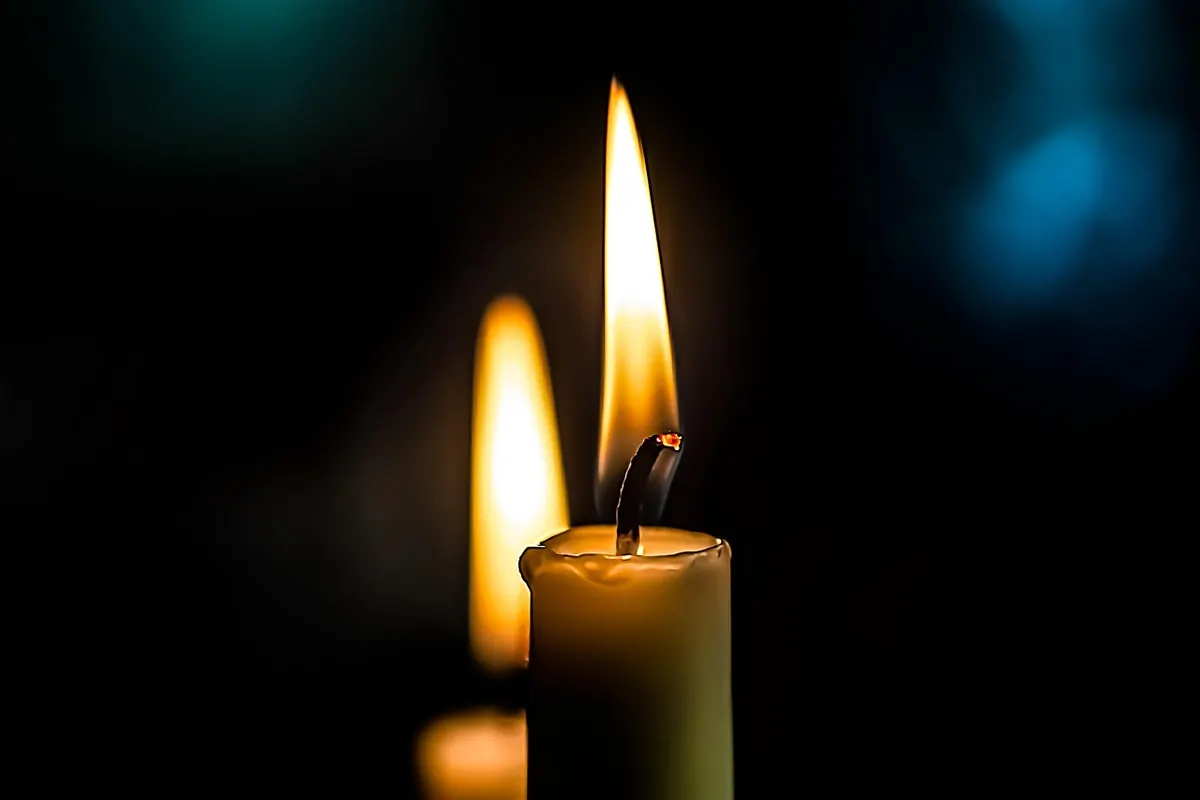
When you compare candles, weigh what actually matters: jar diameter, wax blend, wick count and the shape of the flame. A steady, upright flame with a clean edge to the melt pool is a candle working as intended. A flickering, leaning flame, soot on the glass or a tunnel down the middle all point to fuel and wick being out of step.
For makers, the fix is usually testing rather than simply fitting a bigger wick. Burn a test candle in the sort of room it will live in, keep notes on wax batch, wick size, fragrance percentage and room temperature, and change one variable at a time so you know what worked. For everyone else: place candles out of moving air, trim the wick, and don't judge a candle by its first hour. Two identical-looking candles can behave completely differently — and now you know why.
Photo: Thilipen Rave Kumar / Pexels