A candle can smell rich and promising in the jar, then turn almost silent once it is lit. That gap between cold throw and hot throw is where most seasonal candles let people down, and it is rarely the fault of the fragrance oil. Cold weather changes how wax melts, how far scent travels and how our noses read it. Get a handful of fundamentals right and you can pour autumn and winter candles that scent a room properly without turning sickly.
Cold Throw, Hot Throw, and Why November Changes Both
Cold throw is what you smell from an unlit candle. Hot throw is what fills the room once the melt pool forms. They are produced by the same oil but behave differently, and the difference sharpens in winter.
In a cool room, wax takes longer to reach a full melt pool, so the first hour of a burn can feel disappointing. Add a draughty hallway, a front door opening every few minutes or an extractor fan in a small flat, and scent that seemed strong in a warm kitchen in September can vanish by Bonfire Night. Test in the room the candle will actually live in, at the temperature it will actually be burned at. A candle tested on a warm windowsill tells you very little.
Notes That Carry in Cold Air
Some fragrance families push through cold, dry air far better than others. Resins, woods, spices and gourmand notes are heavy molecules that linger and settle into a room. Citrus zest, delicate florals and green, ozonic accords are fleeting; they lift a blend but rarely carry one on their own.
- Wood and resin: cedarwood, sandalwood, vetiver, patchouli, amber, labdanum, oakmoss.
- Warm spice: clove, cinnamon, cardamom, ginger, nutmeg, star anise.
- Sweet and dark: vanilla, tonka, benzoin, fig, damson, blackberry, baked apple, honey.
- Smoke and leather: birch tar and smoke accords, tobacco, leather, guaiacwood.
- December greens: fir, pine, eucalyptus, rosemary, bay.
Think in terms of a British palette rather than an American one: damp woodland and leaf mould, woodsmoke on a cold walk home, mulled wine, blackberry hedgerows, fig and honey, frost-bitten pine. Those references give you a blend brief that is far easier to test against than "cosy".
Matching Fragrance Load to Your Wax
Most candle waxes hold somewhere between 6 and 10 per cent fragrance oil by weight. Soy and rapeseed blends often sit happily at 6 to 8 per cent; paraffin and blended waxes can usually take 8 to 10. Pushing past what the wax can hold does not increase throw. It gives you oil weeping on the surface, a struggling wick, soot on the glass and an uneven burn.
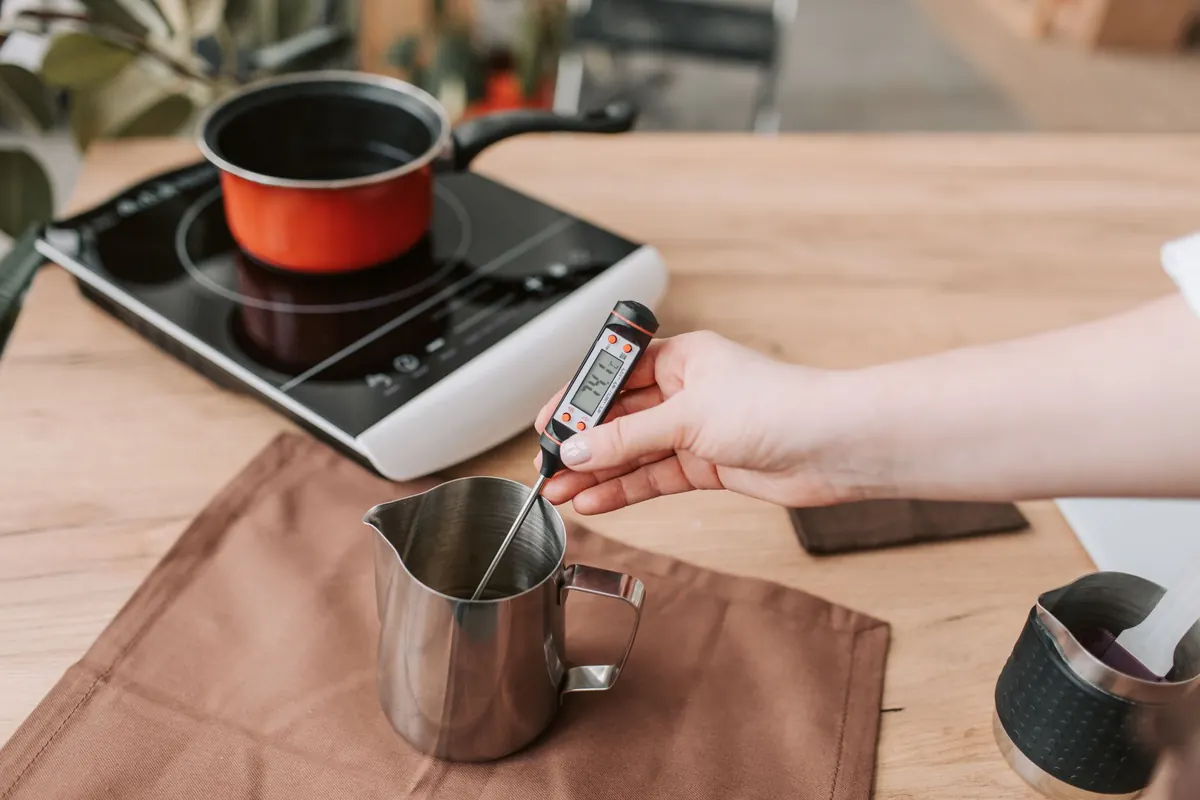
Weigh the oil. Drops and teaspoons are not measurements, and a half-teaspoon of clove oil is nothing like a half-teaspoon of cedarwood. Add oil at the temperature your wax supplier recommends, usually around 60 to 70°C for many soy and rapeseed blends, and stir gently for a minute or two rather than whisking air into it.
Cure time is not a formality
Soy and rapeseed candles improve noticeably over one to two weeks of curing. Paraffin is usually ready in two or three days. Judge a candle 24 hours after pouring and you will often decide it is weak when it simply has not settled yet. Fragrance oils with a low flash point are fine in candles; flash point concerns storage and shipping, not performance.
If you sell what you make, allergen and CLP labelling rules apply to your finished candles, so check current guidance and your supplier's documentation before listing anything.
Wicks, Vessels and Draughts
Vessel diameter drives wick choice more than wax type does. A wide 30cl jar needs a bigger wick, or two smaller ones, than a narrow 20cl tin. Two wicks are usually a better answer than one oversized wick, which mushrooms, soots and burns hot enough to cook the fragrance.
Aim for a full melt pool within two to three hours. In a cold room this takes longer, and that is fine; do not oversize the wick to force it, because the same candle will overheat once the heating is on and the room warms up. Wooden wicks crackle nicely under smoky blends but need trimming before every burn and are less forgiving to tune. Keep cotton wicks trimmed to about 5mm, and remember that placement matters: a candle beside a radiator or in a doorway will underperform a well-made one in a sheltered corner.
Building a Seasonal Blend That Holds Together
A workable starting ratio is roughly 50 to 60 per cent base notes, 25 to 35 per cent heart, and 10 to 20 per cent top. So a woodland blend might be 45 per cent cedarwood and patchouli, 30 per cent vanilla and tonka, and 25 per cent sweet orange with a touch of clove.
Treat clove, cinnamon and star anise with respect. They are powerful, they can flatten everything around them, and they are skin sensitisers, so modest doses and accurate labelling matter. Blend small samples first, around 10g, and let them sit for a day before you judge: a blend that smells sharp and separate straight after mixing often settles into something much better overnight.
Test It the Way It Will Be Burned
- Pour two or three 100 to 150g test jars, changing only one variable each time.
- Cure them fully, then burn for two to three hours in the room they are meant for, with the door shut.
- Leave the room, then walk back in. That first impression from the doorway is the honest measure of hot throw.
- Smell again after two hours. If only the sweet top notes remain and the base has disappeared, rebuild the blend.
- Repeat with a window cracked open or the heating off, since that is how a winter evening often behaves.
- Log the wax batch, oil percentage, wick size and pour temperature so a good result can be repeated.
Before You Pour Your Next Batch
Seasonal candles reward patience more than cleverness. Choose notes with weight, weigh your oil rather than guessing, cure properly, and match the wick to the vessel instead of the calendar. Test in a cold room with the door shut, and trust your nose from the doorway rather than from directly above the flame.
Pour a small batch now, let it cure while the evenings draw in, and you will know by the first cold snap whether you have a scent that carries or one that only works in the jar.
Photo: Nathan J Hilton / Pexels